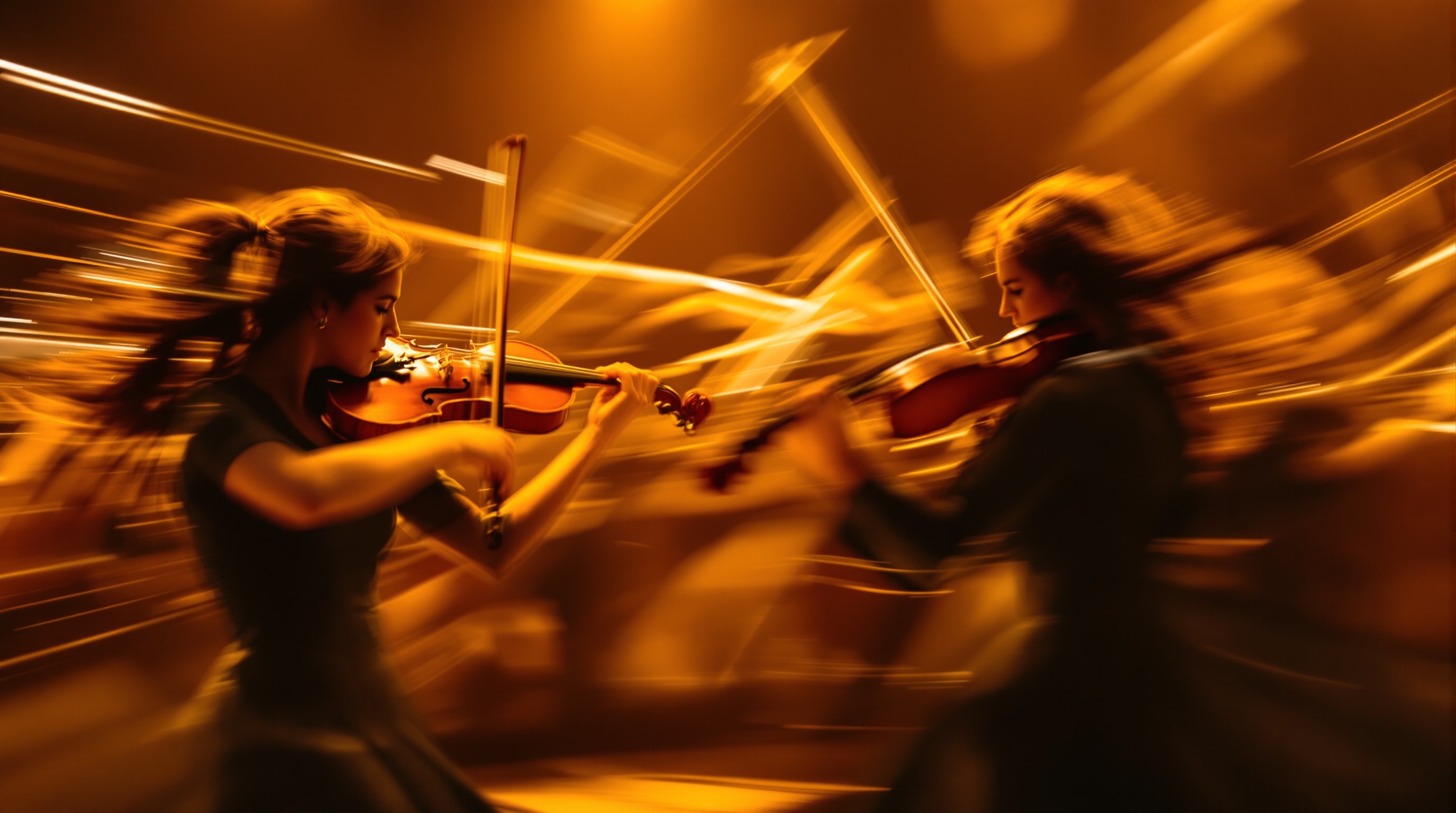
Repertoire and the Csárdás
The programme of a Gypsy symphony orchestra is a journey between two worlds — the village dance floor and the classical concert hall — often within a single evening, and sometimes within a single piece.
The Csárdás
At the core of the repertoire stands the csárdás, the national dance of Hungary. Its defining feature is a structure of contrasting tempos: it typically opens with a slow, deeply expressive section called the lassú, then accelerates into a fast, whirling friss. That built-in acceleration is thrilling in performance, and a skilled orchestra will stretch the slow section into aching rubato before releasing the audience into the headlong dance.
The csárdás grew in the nineteenth century out of an earlier recruiting-dance style, and it became the signature form through which Gypsy bands displayed both their expressive depth and their virtuosic speed. To this day it is the piece most associated with the tradition, and the one most likely to bring a concert audience to its feet.
Liszt, Brahms and the Classical Crossover
The orchestra's repertoire reaches well beyond folk dance into the classical canon that Hungarian and Romani music helped inspire. The Hungarian Rhapsodies of Franz Liszt and the Hungarian Dances of Johannes Brahms are staples — works in which two of the nineteenth century's greatest composers drew directly on the style and melodies of Gypsy bands. When a Gypsy orchestra plays them, the music returns, in a sense, to its source.
Alongside these come the waltzes and polkas of the Strauss family and other light-classical favourites, arranged to showcase the massed strings and the cimbalom. This crossover is central to the orchestra's appeal: audiences hear familiar concert-hall melodies transformed by the earthy energy and freedom of the Gypsy style.
Folk Roots and Living Tradition
Underpinning everything is a deep well of rural Hungarian folk music — the songs and dances of the countryside from which the whole tradition ultimately springs. These melodies, collected and studied by ethnomusicologists and preserved in archives such as those of the Library of Congress and the Smithsonian, form the raw material that generations of players have elaborated and personalised.
Because the music is transmitted orally, no two performances are identical. A melody is a starting point for ornamentation, variation and spontaneous feeling, so the "repertoire" is less a fixed set of texts than a shared language the musicians speak fluently and freshly each night.
An Evening's Journey
A well-planned programme is a journey of contrasts. It might open with a stately, festive number to establish the sheer scale of the sound, settle into the deep expressive world of a slow csárdás, dazzle with a virtuoso cimbalom or violin solo, sweep through a beloved Liszt rhapsody, and end in a whirling, accelerating dance that leaves the hall on its feet. The pacing is deliberate: light and shade, intimacy and overwhelming force, the familiar and the surprising.
Encores in this tradition are almost obligatory, and they are often the wildest, fastest music of the night — the point at which decades of discipline are let loose into pure exuberance. Audiences who arrive expecting a formal concert frequently leave having experienced something closer to a celebration.
The Art of the Arrangement
Turning this material into music for a hundred players is a craft in itself. Historically the orchestra's arrangers — often its conductors — shaped how the massed strings, clarinets and cimbaloms would divide a melody, when to hold the whole ensemble in thunderous unison and when to spotlight a soloist. A great arrangement lets a hundred musicians breathe as one instrument.
To appreciate how these pieces unfold in performance, read our listening guide, or explore the deeper cultural background in Romani music heritage.